

Lung Bleeding in the Eventing Horse: What EIPH Is and Why It Matters

Eventers leave little to chance. You condition for fitness, school for rideability, and manage every detail of soundness and nutrition across all three phases. Yet one of the most important limits on performance is one that almost never shows itself. It happens deep inside the lungs, leaves no mark on most horses, and quietly shapes how well a horse holds its rhythm on cross-country and finishes clean in show jumping. That limit is exercise-induced pulmonary hemorrhage, or EIPH.
What EIPH Actually Is
EIPH is bleeding in the lungs that occurs when the small, fragile blood vessels of the pulmonary circulation rupture under the pressures of intense exercise. It is far more common than most riders realize. Research shows that essentially all horses working hard experience some degree of EIPH, yet only about 5% ever show blood at the nostrils. For the vast majority, the bleeding is invisible, detectable only by scoping the airway or examining a lung wash after work.
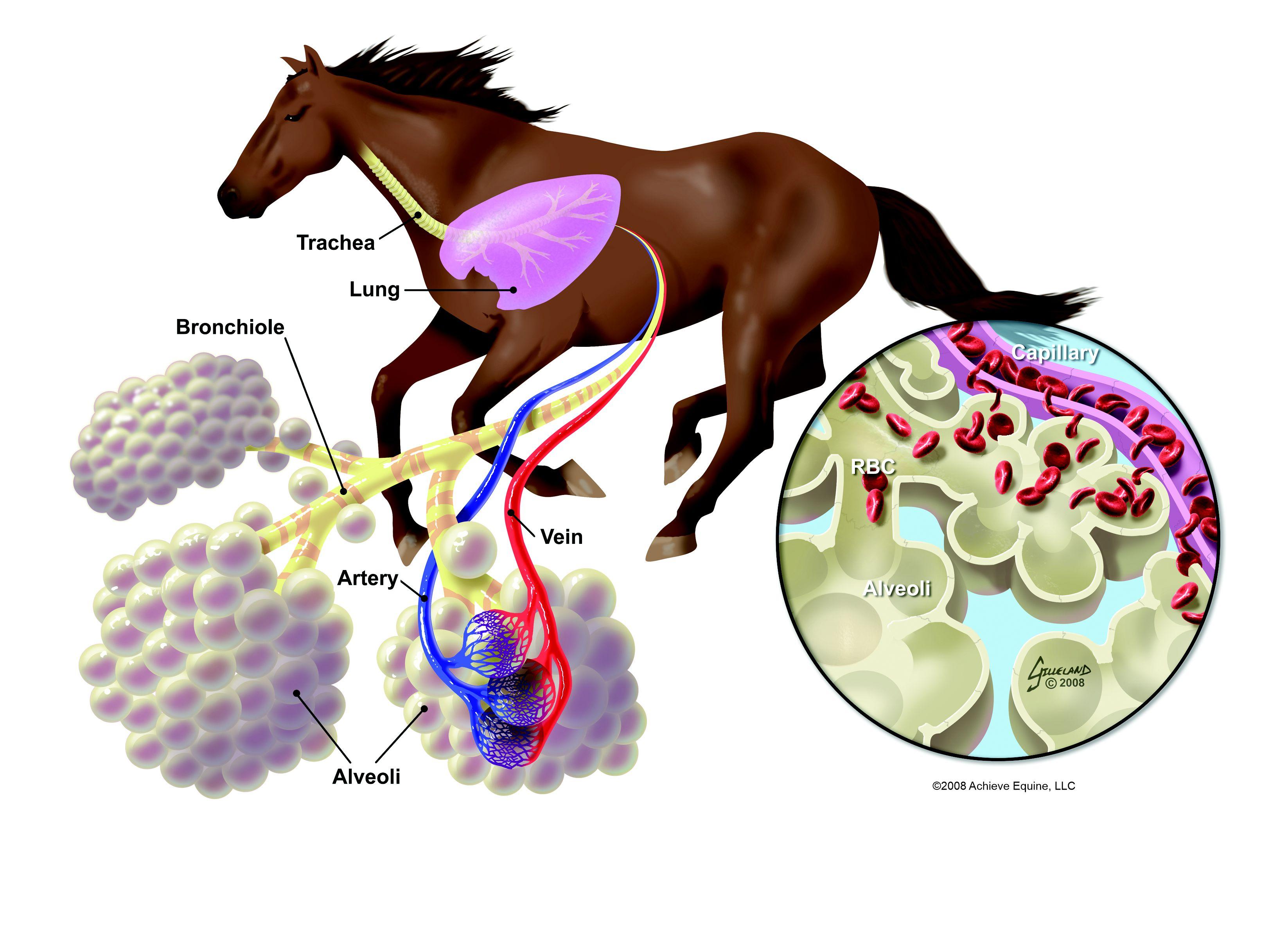
It also does not take racing speed to cause it. Studies have found lung damage in horses cantering at speeds as low as 20 miles per hour, and some have documented bleeding during exercise as mild as trotting. In other words, this is not a Thoroughbred-only concern. Any horse asked to gallop and jump at effort is a candidate.
Why Eventing Horse Are Prone to Bleeding
To understand why eventers are at risk, it helps to start with how a horse breathes. Horses are obligate nasal breathers, meaning every breath of air must pass through the nose. During hard exercise, the negative pressure a horse generates to pull in air can cause the soft tissues over the nasal passages to collapse inward, narrowing the airway and increasing resistance. That resistance translates into greater pressure swings across the delicate capillary walls in the lungs, the very vessels that rupture in EIPH.
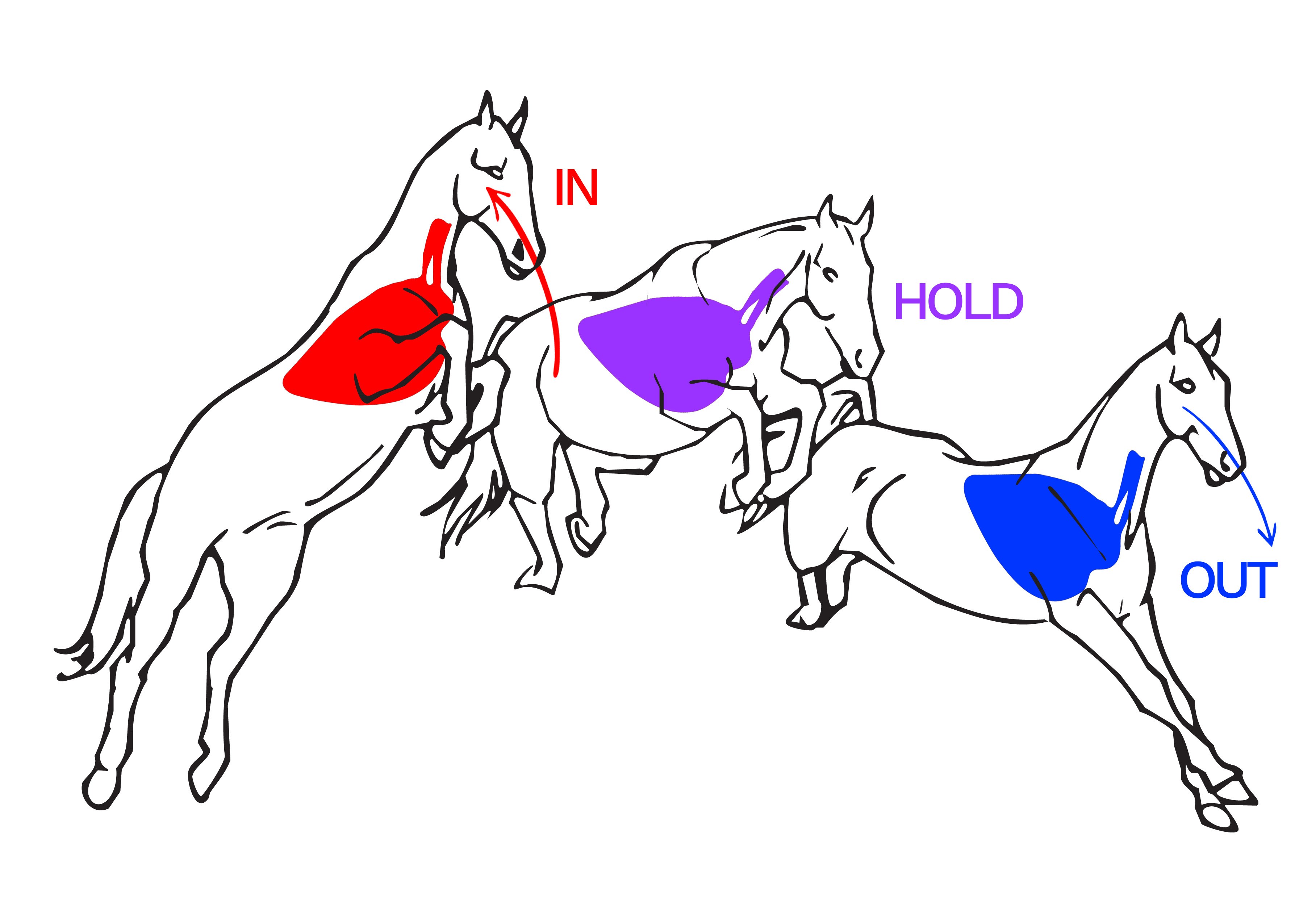
Eventing layers additional demands on top of this. On cross-country, sustained galloping over terrain and distance keeps the respiratory system at maximum effort for minutes at a time, with little opportunity to recover between questions. Jumping adds its own challenge. A horse holds its breath over a fence and only resumes breathing on landing, while rounding the body over an obstacle further increases airway resistance. Over a course, those repeated efforts place sustained strain on the lungs precisely when oxygen demand is highest.
The Long-Term Cost
EIPH matters in the moment because the lung is a primary limiting factor for equine performance. Unlike the heart and muscles, the lungs do not adapt to training, so even a small loss of function can show up as fading impulsion late on course or slower recovery between phases.
Long-term, each bleeding episode can leave scar tissue, which is stiffer and less efficient than healthy lung tissue. With repeated cantering, galloping, and competing, the damage accumulates, and severity tends to increase with age. EIPH is commonly graded from 1 (mild) to 4 (severe) on endoscopic examination, and the central finding is this: roughly 90% of EIPH-related damage comes from repeated, often invisible bleeding over time, not from a single nosebleed. A horse can be losing lung capacity for years before anyone suspects a problem.
What Riders Can Do
Awareness is the first step. Because most bleeding is silent, riders who suspect their horse tires unusually quickly, coughs after work, or recovers slowly may benefit from a conversation with their veterinarian about scoping after exercise. Sound conditioning, attention to air quality in the barn and trailer, and good general respiratory management all support healthier lungs over a career. Reducing airway resistance is another lever, and that is where nasal support can play a role.
Where FLAIR Strips Fit
FLAIR® Equine Nasal Strips support the nasal passages and reduce airway collapse during exercise. By stabilizing the soft tissues over the nasal valve, the Strips lower airway resistance and normalize the pressure across the pulmonary capillary membrane, the same pressure swings that contribute to bleeding. Studies have shown that horses affected by EIPH have fewer blood cells in their airways after exercise when wearing a FLAIR Strip than the same horses working without one.
FLAIR Strips are drug-free, non-invasive, veterinarian-developed, and competition-legal across most disciplines. They are clinically proven to reduce the severity of EIPH and are an important piece of a broader respiratory health management plan. One note for eventers: FLAIR Strips are not currently permitted by the FEI in the dressage phase, so riders competing under FEI rules should plan their use accordingly.
In a sport decided by small margins, respiratory efficiency is one of the most overlooked. It does not replace conditioning, training, or rideability, but it influences all of them. By understanding what EIPH is, why eventing horses are vulnerable to it, and how to support healthier breathing, riders can keep their horses stronger, recovering faster, and competitive from the first stride to the finish.
Related Articles

EA21 Central Riders Put Flatwork Fundamentals to the Test Over Fences
After a full day devoted to flatwork and developing suppleness, 13 young riders returned to Chaps Equestrian Center in Bucyrus, Kansas, early Wednesday morning eager to put those flat sessions to work over fences during the second day of the 2026 USEA Emerging Athletes U21 (EA21) Central regional...
Adjustability Over Fences on Day 2 of EA21 East I Clinic
After yesterday’s adjustability exercises on the flat, the 12 USEA Emerging Athlete Under 21 (EA21) riders got to feel the results over fences on Day 2 of the EA21 East I Clinic with coach Bec Braitling.

USEA Office Will Be Closed in Observance of Juneteenth
The USEA office will be closed on Friday, May 19 in observance of Juneteenth. USEA staff will return emails and phone calls when the office re-opens on Monday, June, 22 or at their earliest convenience.


