

Adjustability Over Fences on Day 2 of EA21 East I Clinic

Leesburg, Va.—June 17—After yesterday’s adjustability exercises on the flat, the 12 USEA Emerging Athlete Under 21 (EA21) riders got to feel the results over fences on Day 2 of the EA21 East I Clinic with coach Bec Braitling.
Working over a course that included gymnastics and simulated cross-country exercises in Morven Park International Equestrian Center’s expansive arena, Braitling tested horse and rider skills in three groups of four.
“The focus was really on understanding our competition step, because ultimately, we're trying to add a little rideability in with this,” she said. “So, we did a little bit of a hybrid show jumping and cross-country riding day. We sort of mixed the two together, which was good. It was nice and challenging. We had a beautiful big space here, so I think it was a nice focus to actually work on riding forward in the jumping phase but understanding the real basics.”
With a combination of green through four-star horses, Braitling appreciated how each exercise could benefit any type of horse as they focused on speed, line, rhythm, balance, and timing.
Braitling started each group with an exercise that served as a bit of an icebreaker, challenging each rider to canter over two poles set five strides apart, first executing it in five strides, then subtracting and adding as many strides as they could to test their horse’s adjustability. It was a fun, informal contest that got everyone laughing. In the end, three strides was the record for fewest, achieved at a cross-country pace, and 12 strides was the record for most, showing how collected some horses could get.
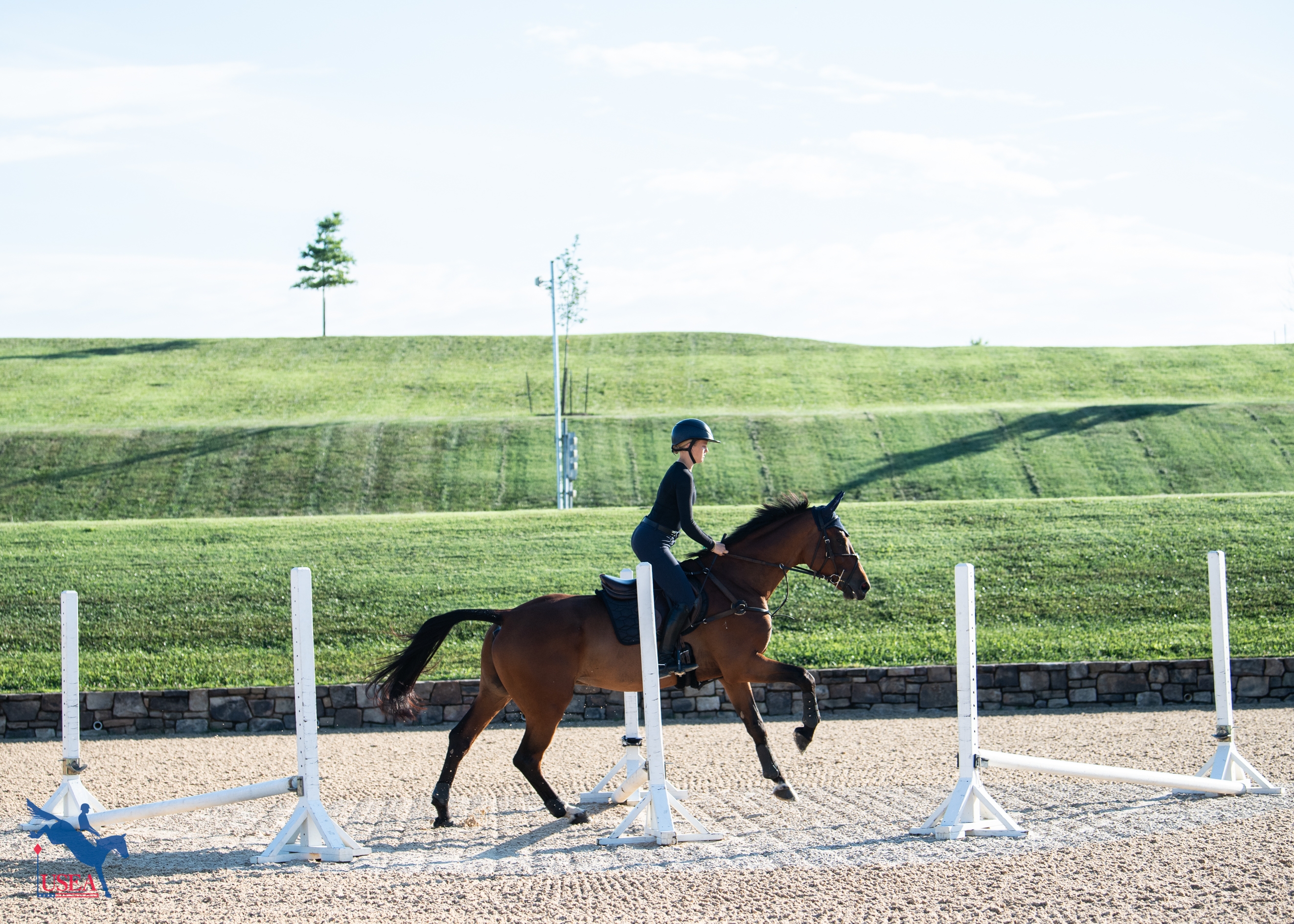
Braitling said this exercise served as a wakeup call before jumping, as riders can sometimes just start in a lazy canter that doesn’t go anywhere. If you don’t start off with an adjustable canter, your first few jumps are likely not going to be very good out of a basic canter.
“It was coming out and challenging them to open the horses up and teach relaxation in forward riding, and I think that's something that we have to really work on as a eventers, and for these young riders to sort of be brave and know that they can have all those gears available.”
Once Braitling had riders start jumping, she used single oxers, verticals, and a triple bounce on a curve to get everyone going forward positively. Then she gradually raised everything from between Training and Preliminary height depending on the skill level in the group.
She used the bounce to get the horse’s footwork back after lengthening the stride over the pole exercise. “Then we go jump some small warm-up fences, but still then come back to the footwork, so that we've got the horses thinking quick feet and the riders thinking quick feet, so that when we move on to some of the other elements, that was part of the foundation of the day.”
One exercise that challenged a few of the greener horses was bouncing off the rail to an angled combination of an oxer, two strides to a vertical. Thinking of squaring the turn, just like the walk pirouette exercise from yesterday, helped catch the outside shoulder and created a successful effort for many pairs.
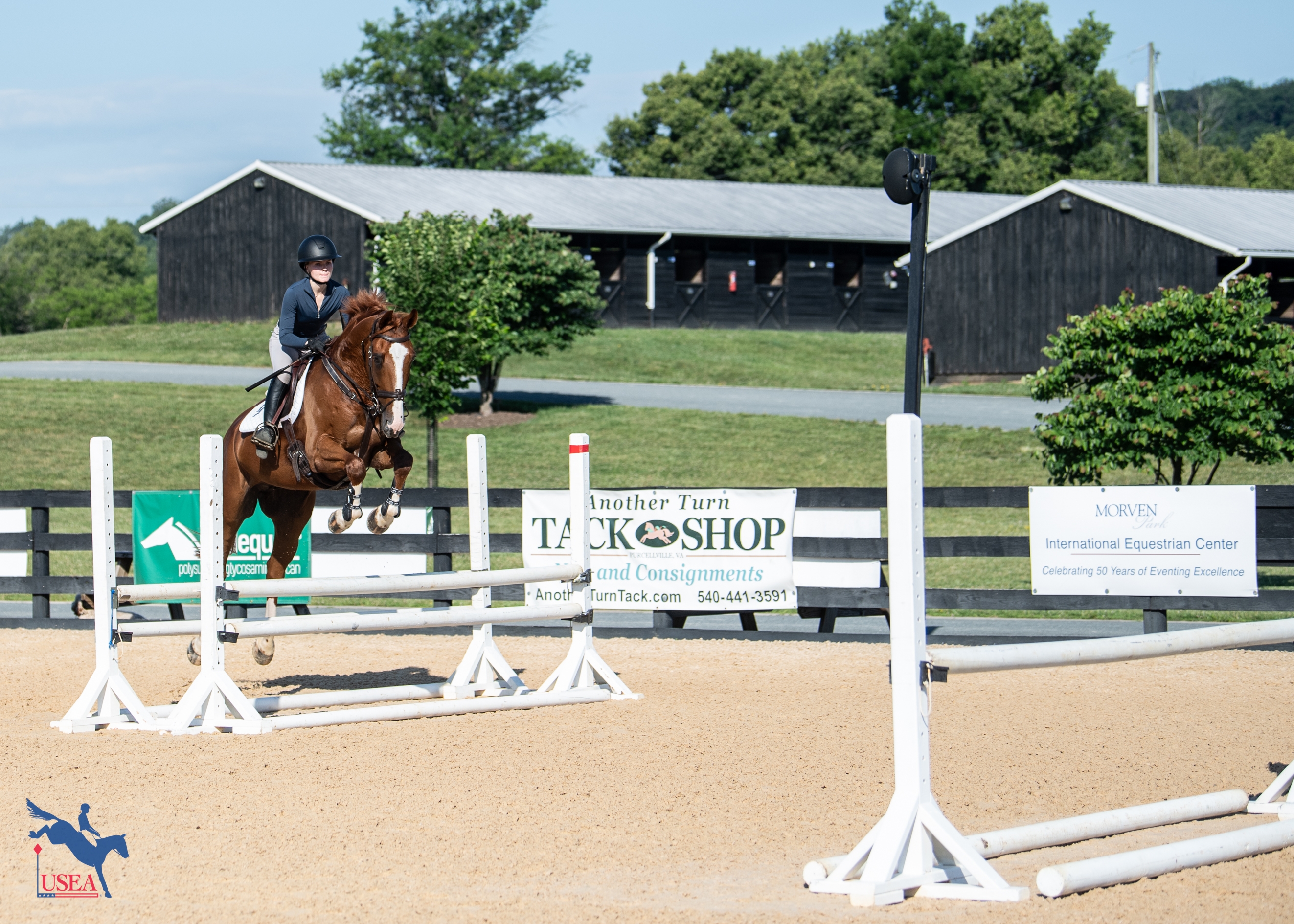
“It was sort of challenging enough, and the nice thing with that is you can make it as small as you want, so the horses can trot in if they don't understand it, and then obviously if the horse is more experienced, it was a really easy question for them, but there's no question that the horse is too young to introduce to in this environment, because you can make the jump so small,” Braitling explained.
Laurel Curry was participating in her first EA21 clinic on a catch ride named Ben. He was enthusiastic over fences and had some trouble in some of the combinations, but Curry helped him through. “I feel like I’ve already learned and progressed so much,” she said of her day. “I think the biggest thing I took away was riding with intention and a plan, then that way you can ride to the best of your ability for your horse and make it as smooth as possible.
Carlin Keefe, who is a repeat EA21 participant, was also on a catch ride, Tim Bourke’s four-star horse Quality Time. “My biggest takeaway from day today was knowing the difference between impulsion and power versus lengthening in between your fences and getting your horse really flat.
Isabella Craft found all the knowledge she gained from the weekend invaluable as a first-time EA21 participant. “One of my biggest takeaways was taking what we did in the dressage yesterday with all the perfect lines and really riding our plan in the jumping phase and keeping that same rhythm at the bottom of the training scale and using all of that to help our jumping phase.”
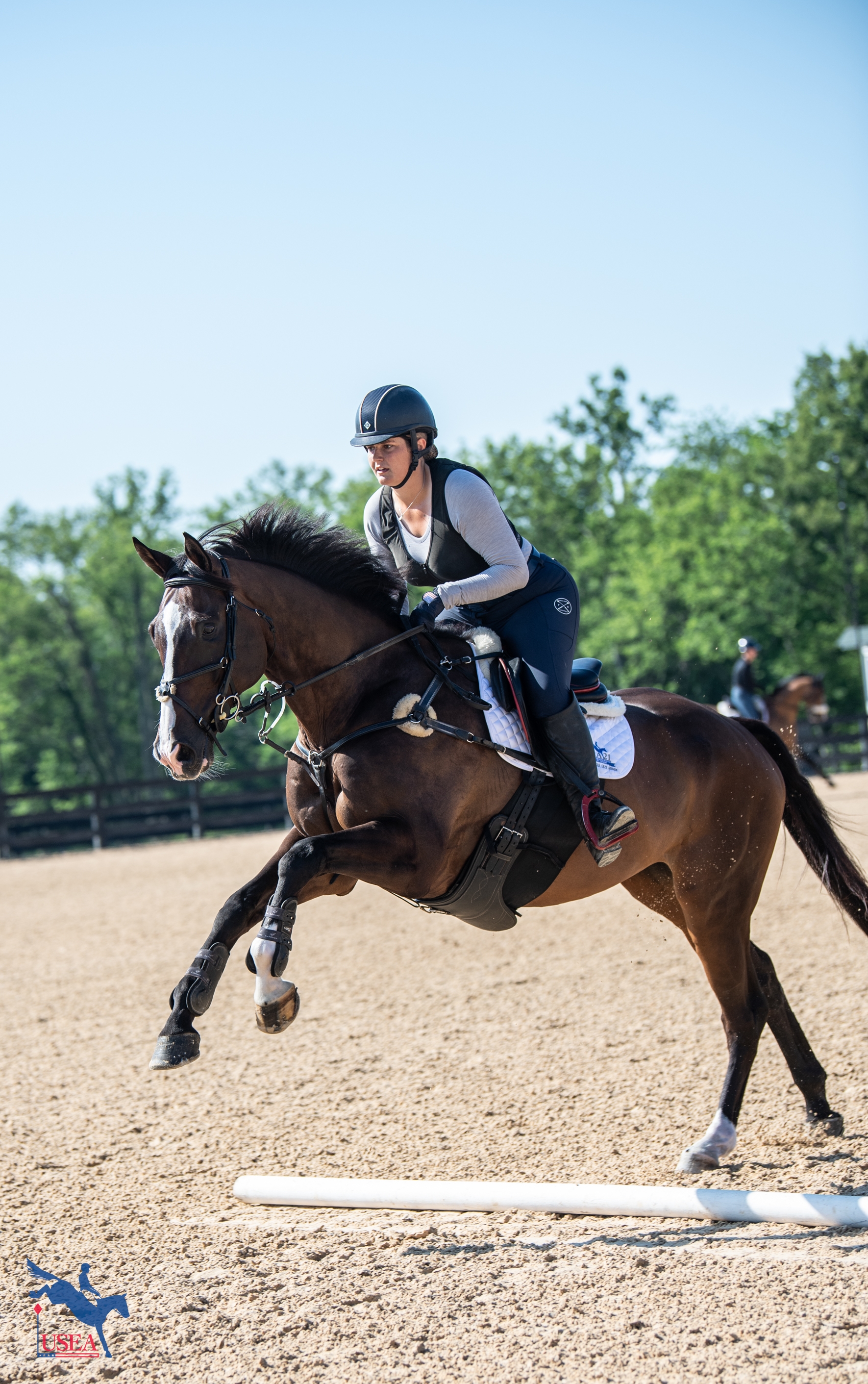
Overall, Braitling was thrilled to see the flatwork exercises transition to today’s jumping.
“The idea of opening the horse up again and then being able to shorten—actually we didn't really see many that couldn't do that. So that was kind of exciting to see that maybe from yesterday that little extra work showed today. A couple of them did use circles to jump into [a combination] and go into a 10-meter circle if they were having trouble finding that balance and shortening of the stride again.”
She was excited about the quality of the group this week, which included several new faces. “I thought this year that the skill level was really high,” she said. “We did have some young horses, so you can't always judge because they're sitting on a young, green horse, but every single one of them, we set up a pretty technical track, and I feel that you could really see how good some of them really are. Most of these kids far beyond where I would have been at that age. So, I thought that was really exciting.”
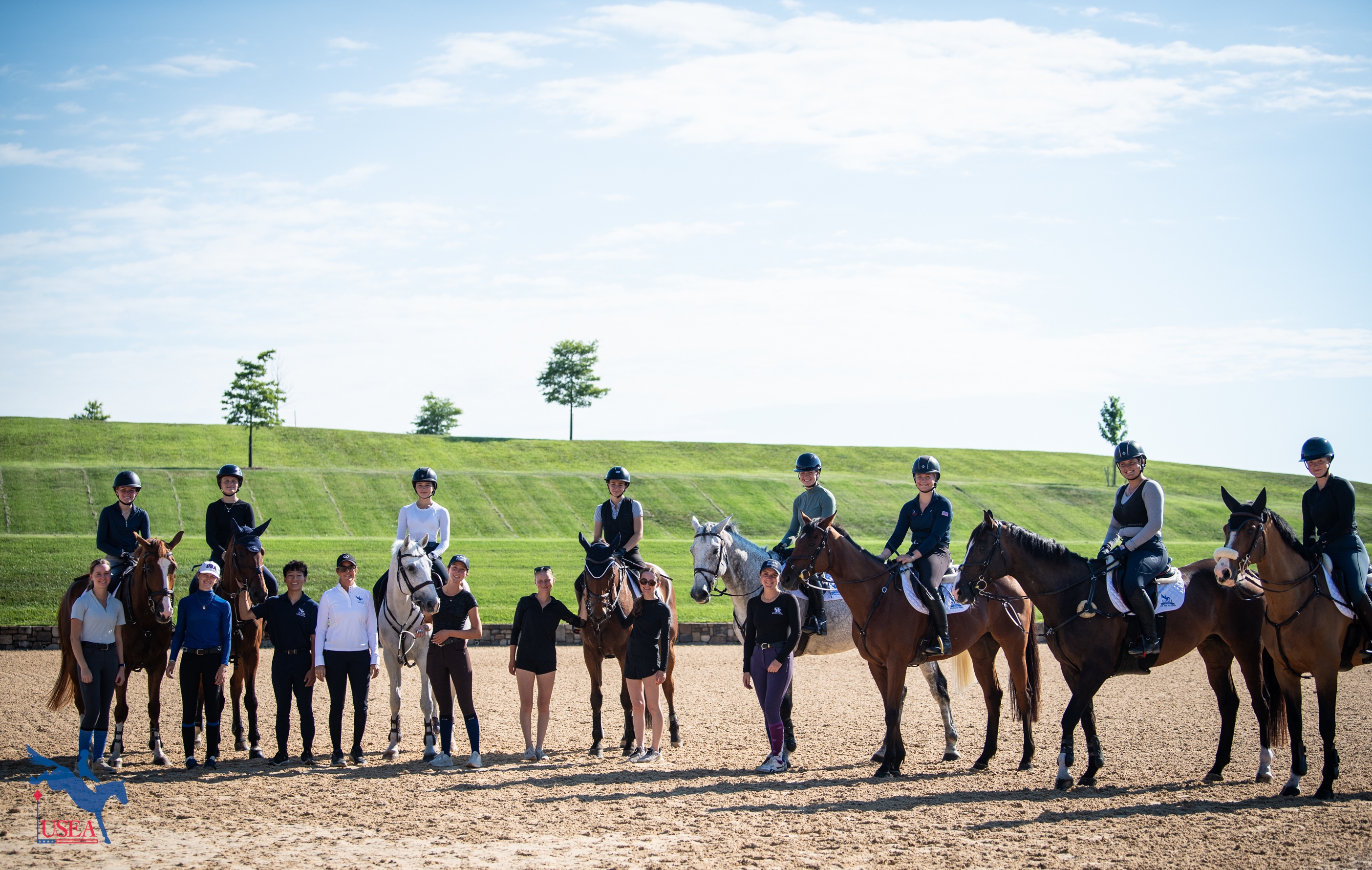
Thanks to the use of the Poggio Fund, a member of the USEA Grooms Committee, Hailey Burlock, was able to be onsite for both days of the clinic, leading horsemanship seminars and assisting riders back at the barn with their overall horse care. The USEA is very grateful to Burlock for taking time out her schedule to attend this year's East I clinic and provide this education to our athletes.
A huge thank you to Susie Beale for serving as the onsite coordinator at the USEA EA21 East I Regional Clinic, to coach Bec Braitling for her time and expertise, and to Morven Park for generously hosting this year's clinic.
The USEA Emerging Athlete U21 (EA21) Program is entirely funded through donations. Led by the EA21 Committee, the program provides educational opportunities for young riders under the guidance of USEA Eventing Coaches Program (ECP) Certified Coaches, helping build the future pipeline of U.S. Eventing. Your support makes this program possible. Please consider making a donation through the USEA Foundation and selecting EA21 as your designated program: https://useafoundation.org/donate.
To hear more from the EA21 East I athletes, check out the USEA’s social media!
East I | Morven Park Equestrian Center | Leesburg, Virginia
The Participants:
- Jaelyn Comer
- Isabella Craft
- Laurel Curry
- Reese Dellangelo
- Megan Hopkins
- Carlin Keefe
- Lyman Ordway
- Emerson Padgett
- James Power
- Annabelle Sprague
- Elle Stephenson
- Riley Zgrebnak
Follow the USEA coverage on social media!
Facebook | Instagram | Threads | TikTok
About the USEA Emerging Athlete U21 Program (EA21)
The purpose of the USEA Emerging Athletes U21 Program (EA21) is to identify and provide consistent quality instruction to the next generation of elite event riders. The aim is to create a pipeline for potential team riders by identifying and developing young talent, improving horsemanship and riding skills, and training and improving skills and consistency.
The USEA Emerging Athletes U21 Program was launched in 2022 with a model of five summertime regional clinics taught by carefully selected USEA Eventing Coaches Program (ECP) coaches, leading to a winter national camp consisting of selected Young Riders from the regional clinics. Athletes who are 21 years or younger, are current members of their USEA Young Rider Area program, and are established at the Training Level or higher, are eligible to apply for the EA21 program. Click here to learn more about the USEA EA21 Program.
The USEA would like to thank ARMA, Bates Saddles, GGT Footing, Horse Illustrated, Kerrits, PulseVet, Ride iQ, Schneiders Saddlery, Sidelines Magazine, WeRideTogether, YETI, and 100xEquine for sponsoring the USEA Emerging Athletes U21 Program.


Related Articles

EA21 Central Riders Put Flatwork Fundamentals to the Test Over Fences
After a full day devoted to flatwork and developing suppleness, 13 young riders returned to Chaps Equestrian Center in Bucyrus, Kansas, early Wednesday morning eager to put those flat sessions to work over fences during the second day of the 2026 USEA Emerging Athletes U21 (EA21) Central regional...

USEA Office Will Be Closed in Observance of Juneteenth
The USEA office will be closed on Friday, May 19 in observance of Juneteenth. USEA staff will return emails and phone calls when the office re-opens on Monday, June, 22 or at their earliest convenience.

Mastervich Emphasizes Learning Through Doing at Day 1 of EA21 West I Regional Clinic
Show, don’t tell was the theme of the day for coach Emily Mastervich on the first day of the USEA Emerging Athletes U21 (EA21) West I Regional Clinic held at Twin Rivers Ranch. So often riders get caught up in managing every moment that they lose sight of what’s next, especially in the dressage.
Official Corporate Sponsors of the USEA
Become a Sponsor


