

EA21 Central Riders Put Flatwork Fundamentals to the Test Over Fences

Bucyrus, Kansas—June 17— After a full day devoted to flatwork and developing suppleness, 13 young riders returned to Chaps Equestrian Center in Bucyrus, Kansas, early Wednesday morning eager to put those flat sessions to work over fences during the second day of the 2026 USEA Emerging Athletes U21 (EA21) Central regional clinic with Level V ECP Certified Coach, Ashley Johnson.
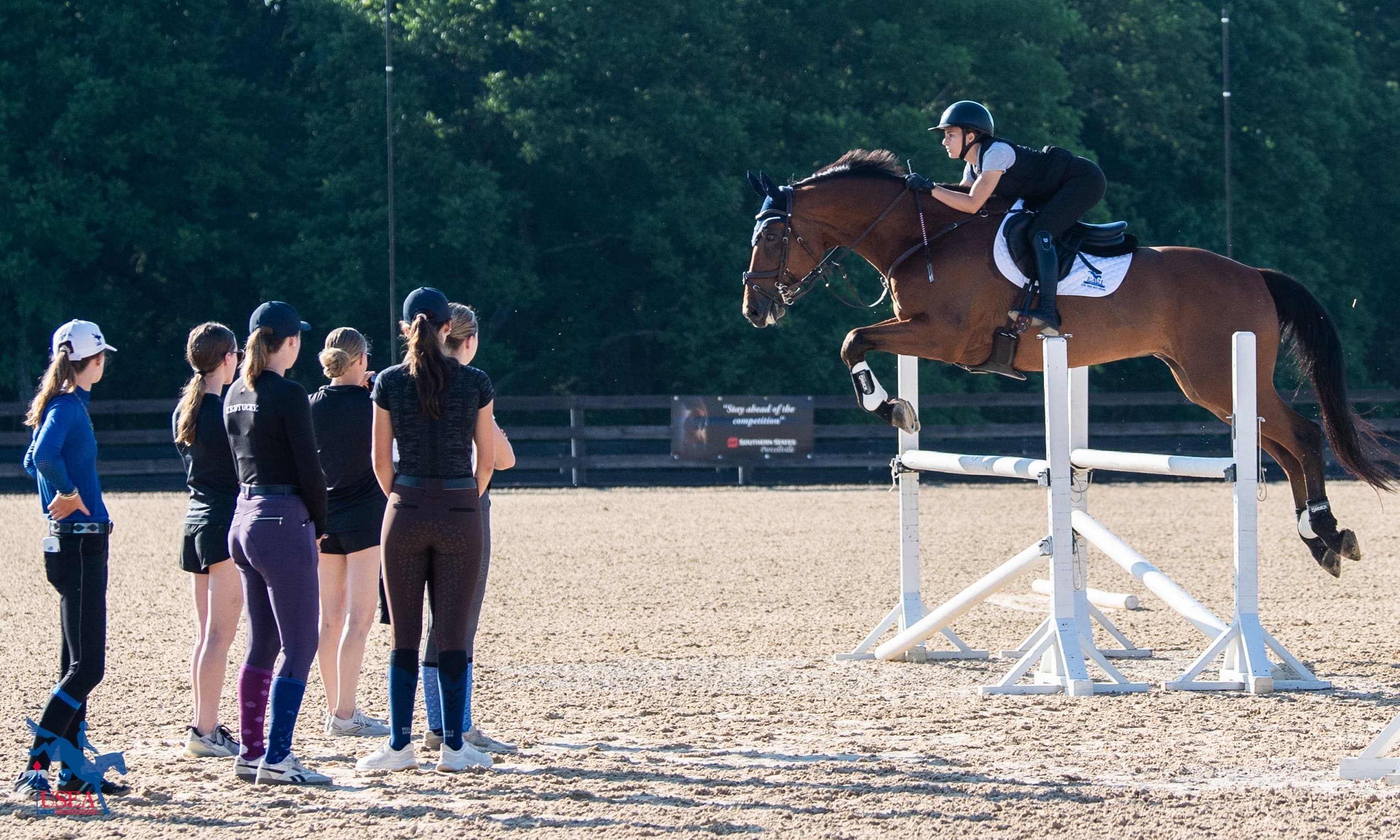
If day 1 focused on creating a more adjustable horse, day two challenged participants to use that adjustability to solve the questions presented in modern eventing courses. Through grids, gymnastic exercises, and technical related distances between lines, Johnson encouraged riders to think critically about their canter, their body position, and their ability to adapt to the horse beneath them.
The day began under much different conditions than Tuesday. Strong winds gusting up to 50 mph swept across the property throughout the morning, whistling through jumps, blowing over standards, and keeping both horses and riders on high alert.
Despite the blustery conditions, Johnson maintained a clear objective throughout each group: improving the horse's adjustability and sharpening its response to the aids.
"Today's exercises are all about footwork and adjustability," Johnson explained throughout the day. "The better we can adjust the canter, the more options we have when the questions start to become more technical."
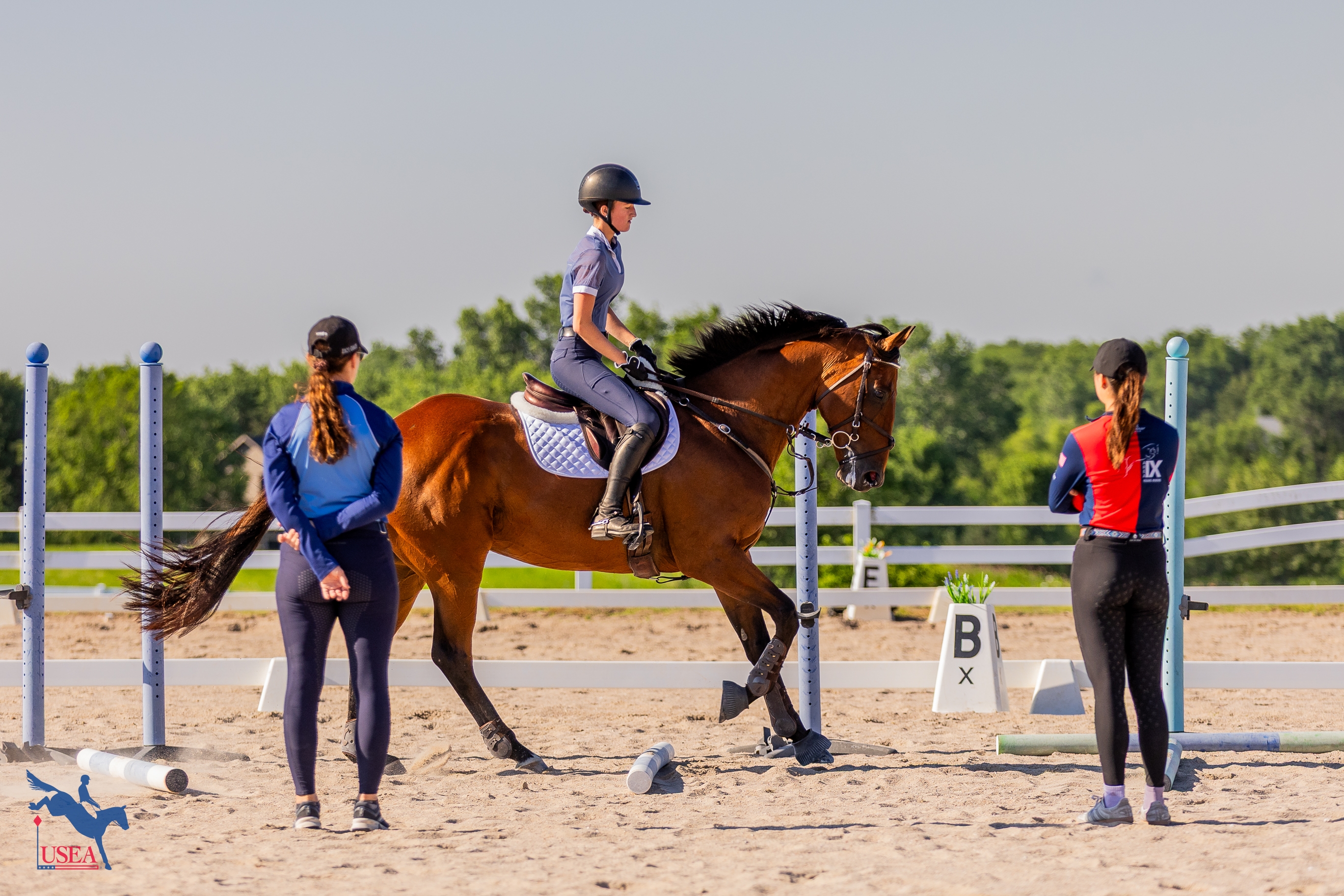
Each session began by warming up on the flat before progressing to canter poles set at 7.5 feet apart. Johnson encouraged riders right off the bat to ask their horses to sit on their hindquarters while maintaining a powerful, bouncy canter— an extension of the back-to-front connection developed during Tuesday's flatwork sessions.
From there, riders worked through increasingly challenging exercises designed to test their ability to package and lengthen the canter without losing balance or power. A six-stride line of small verticals, where Johnson had riders see how many strides they could add, became an early lesson in adjustability. Some riders were able to put as many as 11 strides into the line, demonstrating the concept that an organized canter provides near infinite options in a related distance.
Johnson frequently reminded the girls that effective show jumping begins long before reaching the fence.
"Set your metronome in your canter early," she advised. "Trying to adjust the horse's stride all the way to the base of the fence is a surefire way to confuse your horse."
The concept appeared repeatedly throughout the day as riders navigated rollback turns, one-stride combinations, bending lines, and related distances that demanded both precision and adaptability.
One of Johnson's recurring messages centered on what happens after the jump rather than before it.
"When jumping into combinations, your landing step from one jump is your preparation step for the next," she emphasized.
For event riders accustomed to riding away from cross-country fences, the lesson served as an important reminder that show jumping requires equal attention to both sides of the obstacle.
"Ride the backside of the fence as intentionally as the front side," she encouraged.
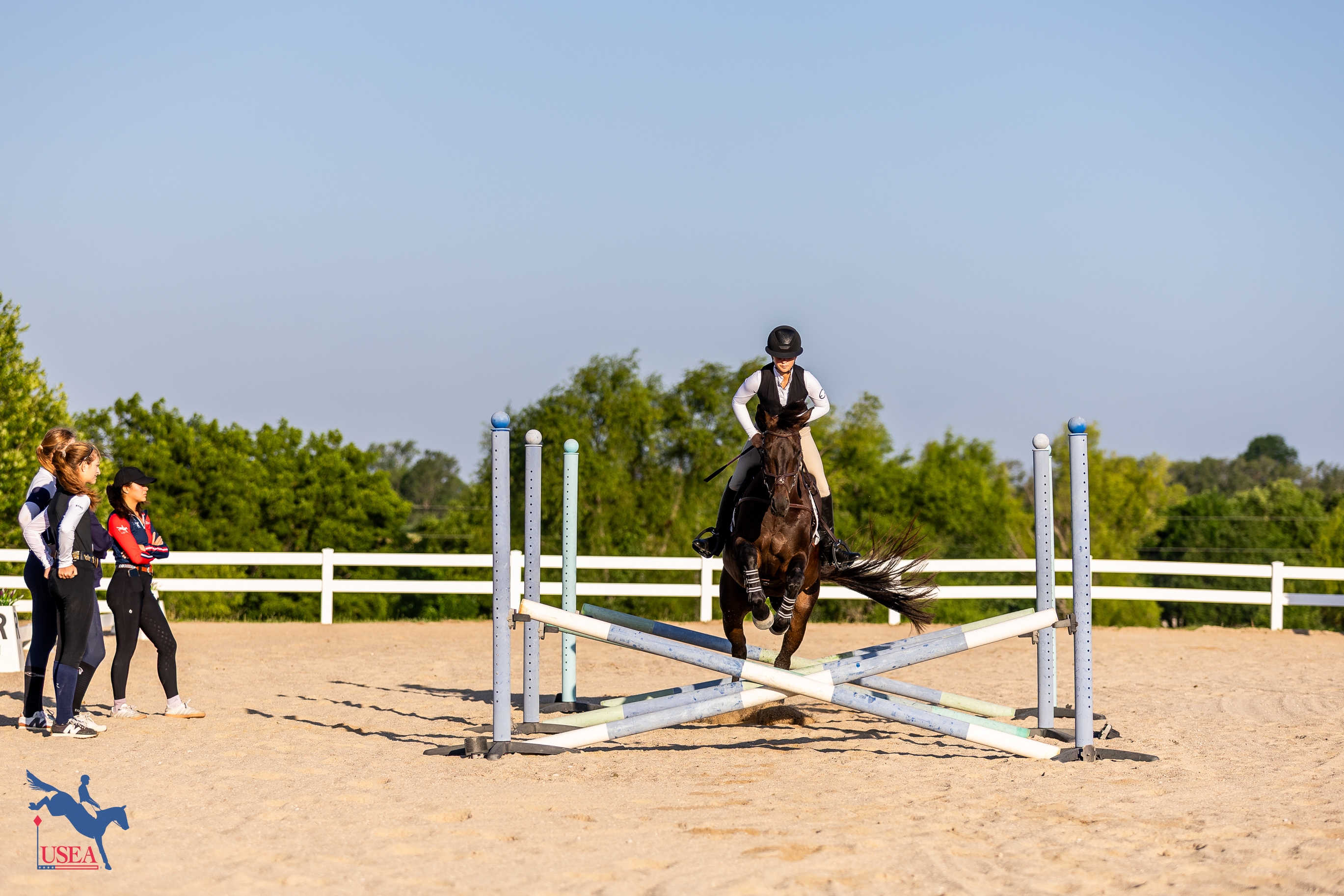
Throughout the day, Johnson relied on memorable analogies to help riders understand difficult concepts. They were asked to imagine their reins as a hallway, with the horse's energy traveling down its center.
"If your reins get too long or you throw your upper body at the fence, you're throwing the energy down the hallway," Johnson explained. "That's when the canter gets out of balance.” Johnson was quick to point out that conversely, if you pull back or lock your elbows, you’re restricting the energy from traveling as well. She advised riders to imagine they’re “pushing the shopping cart” with their elbows while “melting down” into their center of gravity to prevent accidentally pulling back.
Another frequent reminder involved maintaining a supportive upper body.
"If you need to add power, do it with a tall shoulder and your leg," she said. "Not by dropping your shoulders or throwing your hands."
For third-year EA21 participant Ava Davis, Johnson's teaching style offered a unique perspective compared to previous EA21 clinicians.
"It's been interesting," Davis said. "She has a very conceptual way of thinking about things, and she sees stuff through the judge's eyes. With her psychology background, it really just worked with how I think about things."
Davis described one of her biggest breakthroughs as recognizing that effective communication with her horse requires continual refinement.
"I'm riding around and trying to be really present and thoughtful, and then I'm getting feedback that maybe I'm not quite on the mark," she said. "I need to take that feedback and go further with it. I need to find a way to be even more conversational with my horse."
The theme of adaptability extended beyond the arena. When riders encountered challenges with unfamiliar horses, green horses, or difficult exercises, Johnson encouraged them to remain open-minded and resist the urge to become frustrated.
"There will always be moments where you sit on a horse you don't know or aren't getting along with," she told participants. "As an aspiring professional, it's your job to learn something from that horse and make it better."
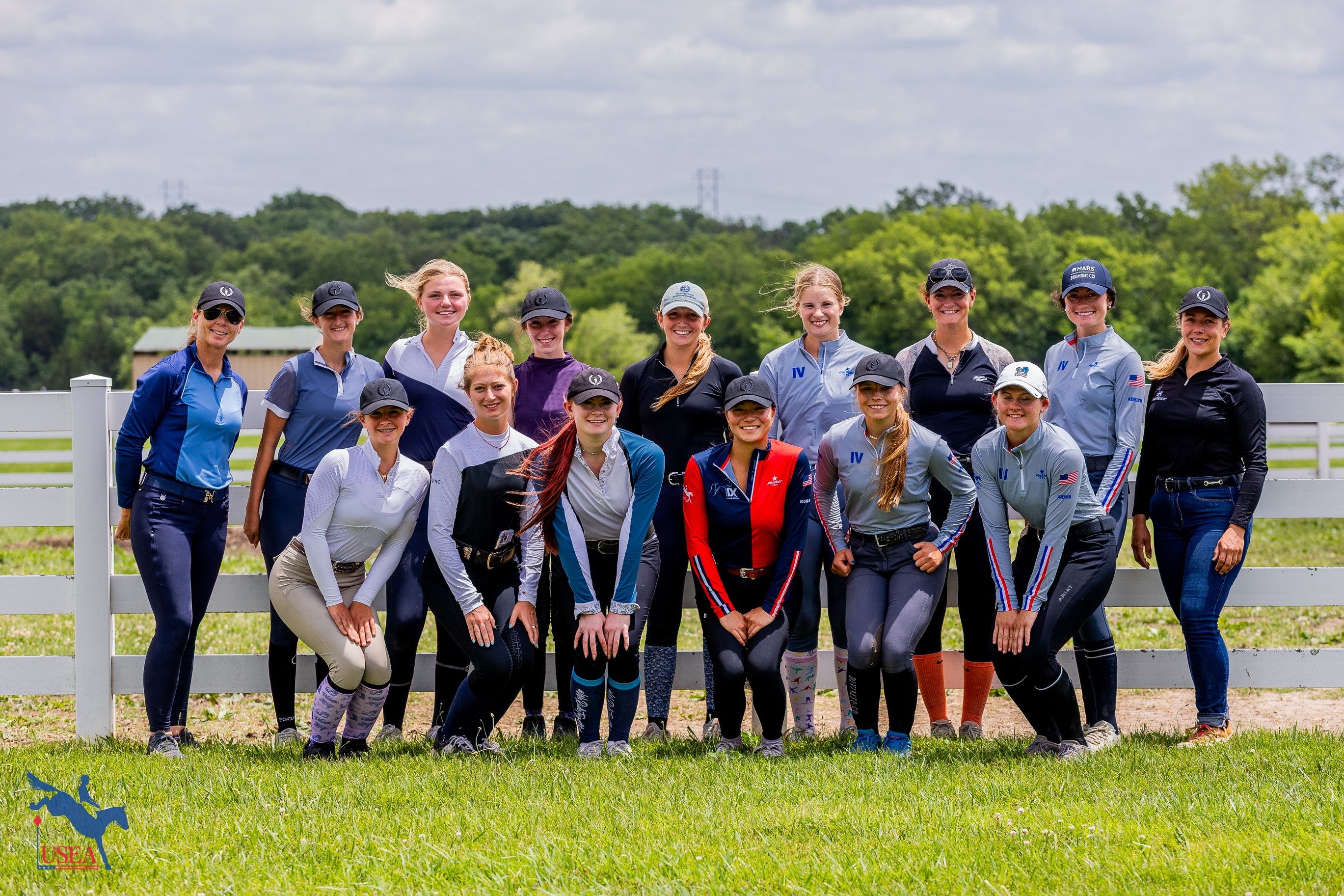
That philosophy resonated with first-time EA21 participant Rayna Williams.
"I was really interested to learn from [Coach Johnson] and for all of the insight and exercises she was able to provide," Williams said. "I mean it’s a big country and there’s so many different minds and so many different ways to train horses to be their absolute best. I think learning from as many people as possible — it’s just motivational for myself.”
When asked what her biggest takeaway riding with Johnson was, Rayna was quick to credit Johnson’s philosophy about being a lifelong student of the sport. "She talked a lot about being a sponge," Williams said. "She said no matter who it is, you can always learn something from them — even if it’s from a little pee wee by the kindness that they’re showing their pony."
The concept of lifelong learning appeared to be a common theme both in mounted sessions and educational lectures throughout the week.
For Sierra Fishell, fourth-year EA21 participant, Johnson's horse-centered approach left a lasting impression.
"I loved Ashley's approach to everything," Fishell said. "She's super patient. She kind of reminds me of David [O'Connor]. She's very much on the horse's side — how to help the horse, how the horse thinks, and what you can do to help them out."
Fishell noted that the educational opportunities extend far beyond riding exercises.
"I feel like that's what this clinic has helped me with so much— not just learning how to find a distance or how to ride, but learning about them," she said, resting a hand on her horse's neck.
Participants also continued to benefit from the presence of five-star groom Isabel Turner, whose horse management sessions offered another layer of education throughout the week.
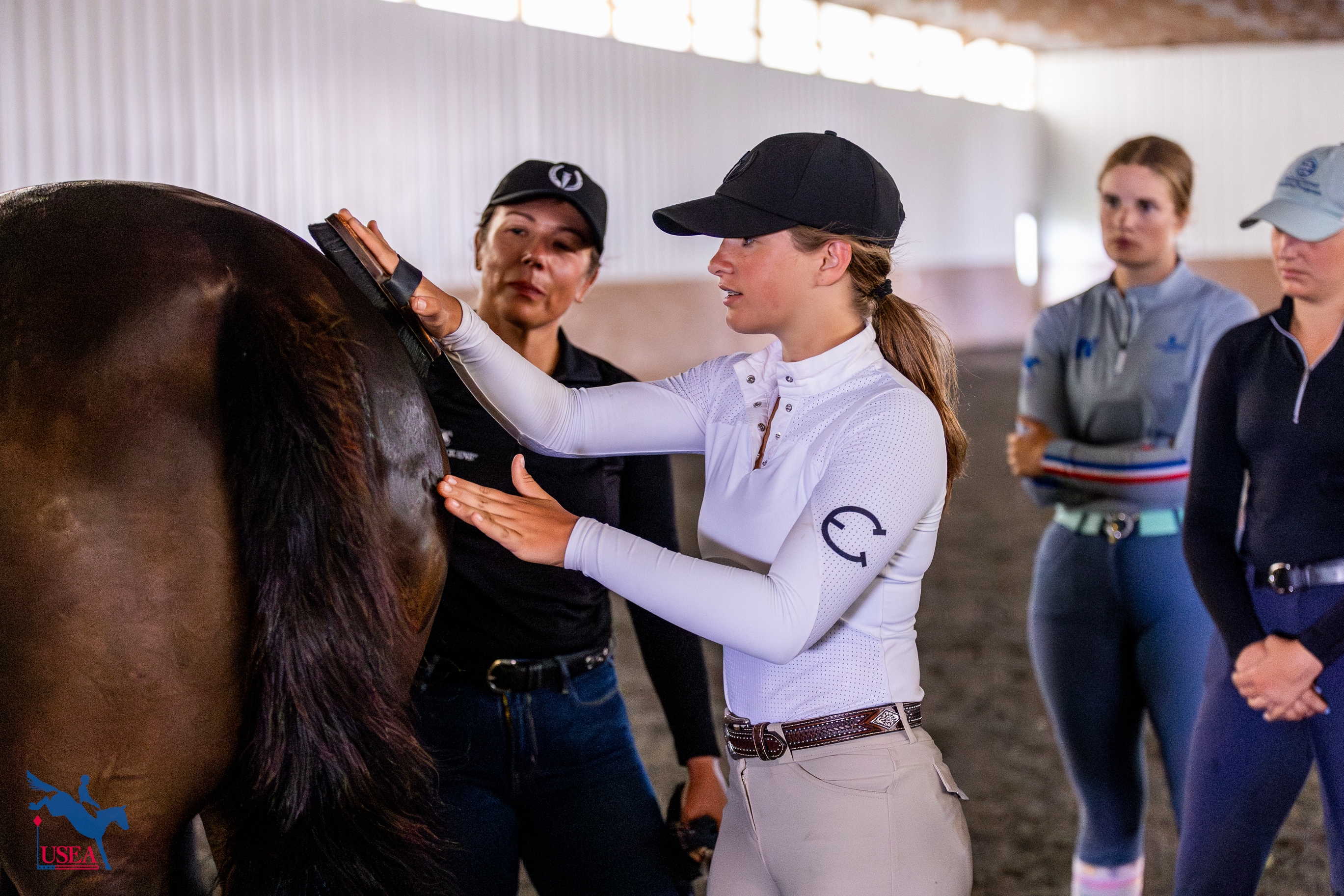
"With Isabel being here, we talked about how issues in riding can come from so many different avenues," Williams said. "It could be nutrition, it could be a fungus, it could be a myofascial issue. There are so many ways to make sure your horse is performing to the best of his ability."
Following the final group of the morning, the girls gathered for lunch and sat down for a final time to discuss everything absorbed over the past two days. They reflected on their biggest takeaways and what exercises benefited them the most while Johnson challenged them to continue approaching their training with curiosity, adaptability, and a willingness to learn.
Whether riders were tasked with “asking for one mile per hour more” in their canter step, navigating a technical line, adapting to a catch ride, or learning from a fellow competitor, this year’s group of EA21 Central riders were reminded that growth comes from remaining a student of the sport, rolling with the punches, and always looking for an opportunity to push yourself out of your comfort zone.
As this year’s EA21 Central regional camp wrapped up, one message remained clear: long-term success in eventing is not simply about winning blue ribbons or riding clear rounds. It is about developing the feel to be adjustable both in and out the saddle, and having the problem-solving skills necessary to critically analyze what each horse needs to successfully answer the questions being asked of them.
Thanks to the use of the Poggio Fund, a member of the USEA Grooms Committee, Isabel Turner, was able to be onsite for both days of the clinic, leading horsemanship seminars and assisting riders back at the barn with their overall horse care. The USEA is very grateful to Turner for taking time out her schedule to attend this year's Central clinic and provide this education to our athletes.
A huge thank you to Christy Hagan for serving as the onsite coordinator at the USEA EA21 Central Regional Clinic and to Chaps Equestrian Center for generously hosting this year's clinic.
Central | Chaps Equestrian Center | Bucyrus, Kansas
The Participants
- Ava Davis
- Olivia Fry
- Sierra Fishell
- Addison Hagan
- Mia Holstien
- Ella Munsat
- Olivia Pratt
- Adelyn Rinehart
- Charlotte Schaef
- Willow Schwartz
- Sierra Thomas
- Elle White
- Rayna Williams
The USEA Emerging Athlete U21 (EA21) Program is entirely funded through donations. Led by the EA21 Committee, the program provides educational opportunities for young riders under the guidance of USEA Eventing Coaches Program (ECP) Certified Coaches, helping build the future pipeline of U.S. Eventing. Your support makes this program possible. Please consider making a donation through the USEA Foundation and selecting EA21 as your designated program: https://useafoundation.org/donate
Follow the USEA coverage on social media!
Facebook | Instagram | Threads | TikTok
About the USEA Emerging Athlete U21 Program (EA21)
The purpose of the USEA Emerging Athletes U21 Program (EA21) is to identify and provide consistent quality instruction to the next generation of elite event riders. The aim is to create a pipeline for potential team riders by identifying and developing young talent, improving horsemanship and riding skills, and training and improving skills and consistency.
The USEA Emerging Athletes U21 Program was launched in 2022 with a model of five summertime regional clinics taught by carefully selected USEA Eventing Coaches Program (ECP) coaches, leading to a winter national camp consisting of selected Young Riders from the regional clinics. Athletes who are 21 years or younger, are current members of their USEA Young Rider Area program, and are established at the Training Level or higher, are eligible to apply for the EA21 program. Click here to learn more about the USEA EA21 Program.
The USEA would like to thank ARMA, Bates Saddles, GGT Footing, Horse Illustrated, Kerrits, PulseVet, Ride iQ, Schneiders Saddlery, Sidelines Magazine, WeRideTogether, YETI, and 100xEquine for sponsoring the USEA Emerging Athletes U21 Program.


Related Articles
Adjustability Over Fences on Day 2 of EA21 East I Clinic
After yesterday’s adjustability exercises on the flat, the 12 USEA Emerging Athlete Under 21 (EA21) riders got to feel the results over fences on Day 2 of the EA21 East I Clinic with coach Bec Braitling.

USEA Office Will Be Closed in Observance of Juneteenth
The USEA office will be closed on Friday, May 19 in observance of Juneteenth. USEA staff will return emails and phone calls when the office re-opens on Monday, June, 22 or at their earliest convenience.

Mastervich Emphasizes Learning Through Doing at Day 1 of EA21 West I Regional Clinic
Show, don’t tell was the theme of the day for coach Emily Mastervich on the first day of the USEA Emerging Athletes U21 (EA21) West I Regional Clinic held at Twin Rivers Ranch. So often riders get caught up in managing every moment that they lose sight of what’s next, especially in the dressage.
Official Corporate Sponsors of the USEA
Become a Sponsor


